
Gravel roads in Iceland: how to drive them and protect the windshield
Last updated: 11 November 2026
Prepared by Ring Road Cars at Keflavík Airport and checked against the official sources listed at the end of this page.
Short answer
More than half of Iceland's national road network is gravel, about 7,000 of 12,937 km, but Route 1, the Ring Road, has been fully paved since 2019. You meet gravel on side roads to sights and farms, on stretches of other main roads and at road works. The limit is 80 km/h, but drive to the conditions: slow down before the asphalt ends (sign: Malbik endar), keep right, and slow down whenever you meet or follow another car, as stones thrown up by tires are what chip windshields. The BASIC + SCDW included in every price doesn't pay for damage only to the windshield. Tire and Windshield Protection (TWP, +€20 a day, the cover of PLUS) pays for a new front windshield damaged by gravel from another vehicle at no excess, and MAX (+€40 a day) has a €0 excess. No option pays for damage to the underside. If a stone chips the glass, photograph it and tell us.
Where you meet gravel in Iceland
Vegagerðin, the Icelandic Road and Coastal Administration, maintained 12,937 km of national roads in 2024, about 5,878 km of them paved (annual report 2024, in Icelandic). Its newsletter puts the gravel at about 7,000 km, or 54% of the network (Framkvæmdafréttir, September 2025, in Icelandic). Route 1, the Ring Road, more than 1,300 km long, has been fully paved since 2019. So expect gravel here:
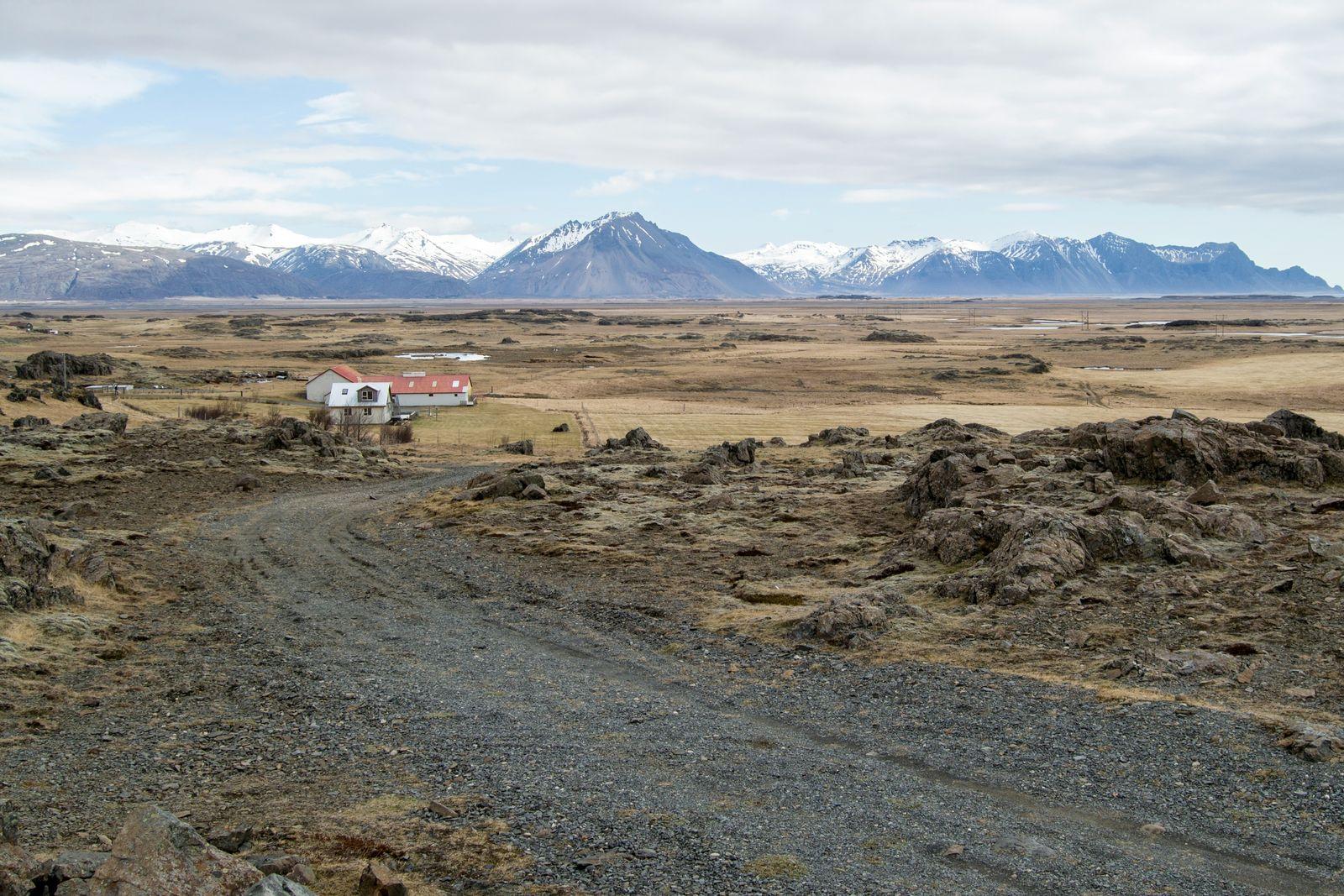
- Side roads to sights, farms and summer houses: uneven gravel roads are frequent once you leave the most popular roads (Vegagerðin).
- Stretches of other main roads: the UK government warns that some main routes can be gravel (GOV.UK), and the Government of Canada that many inland roads are unpaved, narrow and lack shoulders (travel.gc.ca). Our regional guides show the gravel on each route: the Westfjords, East Iceland and North Iceland.
- Road works and fresh chip seal, even on paved roads: Vegagerðin's Steinkast (flying stones) sign marks newly laid or repaired chip seal where stones can be thrown up (traffic sign manual, in Icelandic). Current road works are listed on umferdin.is.
- F-roads in the highlands, which only a four-wheel drive car confirmed as F-road approved may drive, only when they are officially open and never the F-roads our terms rule out for every car (F-roads).
To see which roads on your route are gravel, open the Pavement map on umferdin.is, Vegagerðin's road information site: it shows paved roads and gravel roads in different colors.
Five gravel roads are only for an F-road approved 4×4
Gravel roads are not off-road driving (Samgöngustofa), and our cars may use them when they are open, but not unregistered tracks or paths. Besides F-roads, Kjölur (road 35 north of Gullfoss), Kaldidalur (550), Öxi (939) and roads 586 and 864 are only for a four-wheel drive car confirmed in the booking as F-road approved, and only when officially open. Driving them in another car carries the prohibited-road fee of €1,000, and no cover option pays for the damage (rental terms 16 and 40).
How to drive on gravel
The limit on gravel is 80 km/h unless signs say otherwise (Ísland.is), and it is a maximum, not a target: the police remind drivers to always adjust their speed to the conditions and the traffic.
- Slow down before the asphalt ends. The warning is a triangle with an exclamation mark above the plate Malbik endar (traffic sign manual). Tires can lose grip where the surface changes, and if you drive too fast you can easily lose control (Safetravel).
- Take bends and crests slowly. Gravel roads can be narrow and hilly, with sharp turns where the grip is not the same as on asphalt. At a blind hill (sign: Blindhæð), slow down and keep as far right as is safe, in case a car comes over the top (Samgöngustofa).
- Steer and brake gently. At unsafe speeds, tires lose their grip on gravel and the car can spin out (Vegagerðin); sudden steering or hard braking makes that more likely.
- Meeting a car: slow down and keep right. Windshields have shattered when two cars met at high speed on a gravel road (Vegagerðin). Where there is no shoulder, move right only as far as the road surface allows.
- Dust: in dry weather, the dust behind another car can make visibility very poor (Vegagerðin). Drop back until you can see, and never overtake into dust.
- Potholes, ruts and washboard (ripples across the road): slow down before them, as a hard hit can damage a tire, a wheel rim or the underside of the car. After rain, expect mud and puddles that hide how deep a pothole is.
- Graders: the sign Vegheflun (a road grader on a warning triangle) means a grader is maintaining the gravel road ahead (traffic sign manual). Pass it slowly, and cross ridges of loose gravel and stones in the road slowly and straight.
- Single-lane bridges (sign: Einbreið brú) are common both on and off the Ring Road, which has had 26 since a new section through Hornafjörður opened on 24 June 2026 (Government of Iceland, in Icelandic). The car closer to the bridge has the right of way, but slow down and see what the other driver does first (Safetravel).
- Stop only off the road, for photos too, even on a quiet gravel road (Samgöngustofa).
Gravel roads in winter
In winter, gravel can be icy or under snow, and quieter roads may be cleared only on some days of the week, or not at all: the Winter service map on umferdin.is shows each road's rule. Every one of our cars has winter tires from 1 November to 14 April (rental terms 1). Check the road conditions before you set off, and never drive past a Lokað (closed) sign.
How to protect the windshield and paint
The danger is stones thrown up by tires: Vegagerðin warns that driving on gravel frequently kicks up small particles that can damage a windshield (Driving safely in Iceland). The same habits protect the paint, headlights and mirrors:
- Keep well back from the car in front, so that the stones from its tires land before they reach you.
- Slow down when a car comes toward you, and keep right. When both cars slow down, a stone hits both windshields with far less force.
- Let faster cars pass: slow down and keep right so they get by quickly. Overtake on gravel only with a long, clear view ahead, never into dust.
- Watch for the Steinkast sign on paved roads too: new or repaired chip seal can leave loose stones on the road (traffic sign manual). Slow down there and keep your distance.
- Give trucks and graders extra room, and don't follow them closely.
If a stone chips the windshield
Before you drive off: look over the windshield at pickup. Chips already there belong on the Vehicle Condition Report you sign, and we send you our photos and a 360° video of the car; damage not recorded then is presumed to have happened during the rental unless you show otherwise (rental terms 10).
- Stop somewhere safe, off the road, and photograph the damage: a close-up, and a wider photo that shows where it is on the glass. Note the time, the place and what happened, for example that a car coming the other way threw up a stone.
- Tell us, the same day if you can: send our online damage report with your photos (when only the rental car is damaged, that report is enough), or call or message us on +354 779 9499.
- Don't have it repaired yourself. Repairs need our written consent first (an email or a message is enough), and repairs we haven't approved are not reimbursed (rental terms 20 and 50).
- If a crack spreads or blocks your view, stop driving and call us on +354 779 9499: our assistance line is open 24/7 (rental terms 50).
- At the return, show us the damage. How we inspect the car and handle a damage charge: How damage works.
What each cover option pays
Travelers often call it gravel protection or gravel insurance. With us it is Tire and Windshield Protection (TWP), a waiver under the rental agreement, not insurance. What each option pays for gravel damage, from our rental terms (clauses 34, 36, 38 and 40) and price list:
| Cover option | Price on this website | Front windshield damaged by gravel from another vehicle | Tire damaged on its own | Underside (undercarriage, drivetrain) |
|---|---|---|---|---|
| BASIC + SCDW | Included in every price | Not covered: you pay the actual cost, up to our price list (€550, €700 or €850, by windshield size) | Not covered: you pay the actual cost, up to our price list (€115–280 per tire, by size and season) | Not covered |
| PLUS (adds TWP) | +€20 a day | A new windshield at €0 excess; fitting and other labor not included | A new tire at €0 excess; rims, fitting and other labor not included | Not covered |
| MAX (adds TWP and SAP) | +€40 a day | A new windshield at €0 excess; fitting and other labor not included | Wheels and tires covered, €0 excess | Not covered |
- With every option, MAX included, a €150 damage administration fee is added each time damage is charged (rental terms 38 and 40(m)).
- TWP on its own is sold as an add-on for €20 a day (price list); on this website, adding it to the included BASIC + SCDW gives you PLUS (rental terms 34).
- Add it before the trip: you can add protection at any time, but it never covers damage that happened earlier, known or not (rental terms 39).
What no option pays, MAX included
Damage to the undercarriage, or to the drivetrain, engine or chassis parts, from rough roads, grader ridges or stones; damage from windblown sand, gravel, ash, pumice or earth, except the sand and ash damage that Sand and Ash Protection (SAP) or MAX covers; and damage only to the windshield that TWP doesn't cover (rental terms, clause 36). Such damage is charged in full, and for undercarriage damage we may hold up to €10,000 on your card after the return inspection (rental terms 7).
Is TWP worth it? If your route includes gravel roads, such as the Westfjords, the east or side roads to sights, we suggest it: €140 for seven days, against €550–850 for a new windshield on our price list. With TWP you still pay the fitting, and the €150 damage administration fee still applies. On paved main roads the risk is lower, but not zero. Every option in detail: Rental car cover and Cover & extras.
Questions about gravel roads and windshields in Iceland
Is the Ring Road in Iceland paved?
Yes. Vegagerðin, the Icelandic Road and Coastal Administration, says Route 1, the Ring Road, has been fully paved since 2019. You still meet gravel on side roads to sights, on stretches of other main roads and at road works: more than half of Iceland's national road network is gravel.
What is the speed limit on gravel roads in Iceland?
80 km/h, unless signs say otherwise. It is a maximum, not a target: slow down before the asphalt ends, in bends, on blind hills, in dust and whenever you meet another car.
How do I avoid windshield chips on Iceland's gravel roads?
Keep well back from the car in front, slow down and keep right when a car comes toward you, let faster cars pass, and slow down where a Steinkast (flying stones) sign warns of loose stones on new or repaired road surface.
Is windshield protection worth it for Iceland's gravel roads?
If your route includes gravel roads, we suggest it. Our Tire and Windshield Protection (TWP, €20 a day, the cover of PLUS) pays at no excess for a new front windshield damaged by gravel from another vehicle, or a new tire when only the tire is damaged, but not for fitting or labor. Without TWP or MAX, a new windshield costs €550–850 on our price list, plus the €150 damage administration fee.
What should I do if a stone chips my rental car's windshield?
Stop somewhere safe off the road, photograph the chip close up and from further back, and note when, where and how it happened. Then tell us: when only the rental car is damaged, our online damage report with photos is enough. Don't arrange a repair yourself, as our terms require our written consent first.
Does any rental car cover pay for underbody damage on gravel roads?
No. Under our rental terms, no option, MAX included, covers damage to the undercarriage, or to the drivetrain, engine or chassis parts, from rough roads, grader ridges or stones. Drive slowly over potholes, stones and ridges of loose gravel.
Can I drive a rental car on gravel roads in Iceland?
Yes. Gravel roads are not off-road driving, and our cars may use them when they are open. The exceptions are F-roads and five named roads, Kjölur (road 35 north of Gullfoss), Kaldidalur (550), Öxi (939) and roads 586 and 864, which need a four-wheel drive car confirmed in the booking as F-road approved and may be driven only when officially open; some F-roads are off-limits to every car (rental terms 16). Driving off the road is illegal.
Official sources
Our cover, prices and rules on this page come from our rental terms and price list. The facts about Iceland's roads come from these official sources (checked 10 November 2026):
- Rental terms and price list — Ring Road Cars
- Driving safely in Iceland — Vegagerðin
- The Ring Road — Vegagerðin
- Annual report 2024: the national road network (in Icelandic, PDF) — Vegagerðin
- Framkvæmdafréttir no. 736, September 2025: gravel roads (in Icelandic, PDF) — Vegagerðin
- Traffic sign manual: warning signs, March 2025 (in Icelandic, PDF) — Vegagerðin
- Pavement map: paved and gravel roads — umferdin.is (Vegagerðin)
- Winter service map — umferdin.is (Vegagerðin)
- How to drive in Iceland — Safetravel
- How to Drive in Iceland: summer leaflet (PDF) — Samgöngustofa
- Speed limits for vehicles — Ísland.is (Icelandic police)
- Iceland travel advice: safety and security — Government of Canada
- Foreign travel advice for Iceland: safety and security — GOV.UK