
Is it safe to drive in Iceland? What the official numbers say
Last updated: 11 November 2026
Prepared by Ring Road Cars at Keflavík Airport and checked against the official sources listed at the end of this page.
Short answer
By European standards, Iceland's road-death rate is low, but its roads have risks of their own. In 2025, 10 people died on Iceland's roads, one of them a foreign tourist, and 182 were seriously injured; over 2016–2025 the average was 11.5 deaths a year (Samgöngustofa). Over 2021–2025, Iceland had the fifth-lowest road-death rate per head of population in Europe, according to the Icelandic Transport Authority. Most serious risks are specific and avoidable: loose gravel where the asphalt ends, single-lane bridges, cars stopped on the road for photos or the northern lights, sheep, strong wind, winter ice and darkness, tiredness after an overnight flight, and rivers on F-roads. Check umferdin.is and vedur.is before you set off, and drive to the conditions, not to the speed limit.
What the official numbers say
Two public bodies track road accidents in Iceland: the Icelandic Transport Authority (Samgöngustofa) keeps the accident register, based on police reports, and the Icelandic Transportation Safety Board (RNSA) investigates fatal crashes. A seriously injured person is one with, for example, fractures, concussion or internal injuries, usually needing a stay in hospital (Samgöngustofa, in Icelandic).
| Year | Killed | Seriously injured | Foreign tourists killed | Foreign tourists seriously injured |
|---|---|---|---|---|
| 2021 | 9 | 199 | 0 | 17 |
| 2022 | 9 | 195 | 2 | 18 |
| 2023 | 8 | 229 | 1 | 36 |
| 2024 | 13 | 228 | 3 | 61 |
| 2025 | 10 | 182 | 1 | 34 |
| 2021–2025 | 49 | 1,033 | 7 | 166 |
| 2016–2025, ten years | 115 | 1,951 | 22 | 332 |
- 2025: 10 people died in 10 crashes and 182 were seriously injured, down from 13 deaths and 228 serious injuries in 2024 (RNSA, Samgöngustofa, both in Icelandic).
- Foreign tourists: one tourist died and 34 were seriously injured in 2025, out of about 2.27 million tourists who arrived through Keflavík Airport: 15.4 killed or seriously injured per million tourists (ten-year average: 18.9). Of the 115 people killed on Iceland's roads in 2016–2025, 22 were tourists.
- Who was driving: tourists were at the wheel of 3 of the 14 vehicles involved in 2025's fatal crashes, and of 29 of the 219 vehicles in crashes with serious injuries.
- How fatal crashes happen: over 2016–2025, cars leaving the road or rolling over (32 of 104 fatal crashes) and head-on collisions (30) were by far the most common types.
- Compared with Europe: Iceland had 2.6 road deaths per 100,000 inhabitants in 2025; in Samgöngustofa's Nordic comparison, Denmark had 2.3, Norway and Sweden 2.0 and Finland 3.3. Samgöngustofa ranks Iceland sixth in Europe for the fewest road deaths per head of population in 2025, and fifth over the five years 2021–2025.
Why one year can mislead
A few crashes move a small country's figures a lot: Iceland had 6 road deaths in 2019 and 13 in 2024, and it ranked twelfth in Europe in 2024 but sixth in 2025. That is why Samgöngustofa compares five-year averages, and why this page gives ten years of figures.
One thing the numbers don't show: help can be far away. On parts of the Ring Road an ambulance can be up to an hour away, and longer in remote areas (Vegagerðin), so avoiding the crash in the first place matters even more here.
The risks that are particular to Iceland
Vegagerðin, the Icelandic Road and Coastal Administration, says many first-time visitors find parts of the road system very different from what they are used to (Vegagerðin). These are the risks the official advice keeps coming back to, with the habit that deals with each:
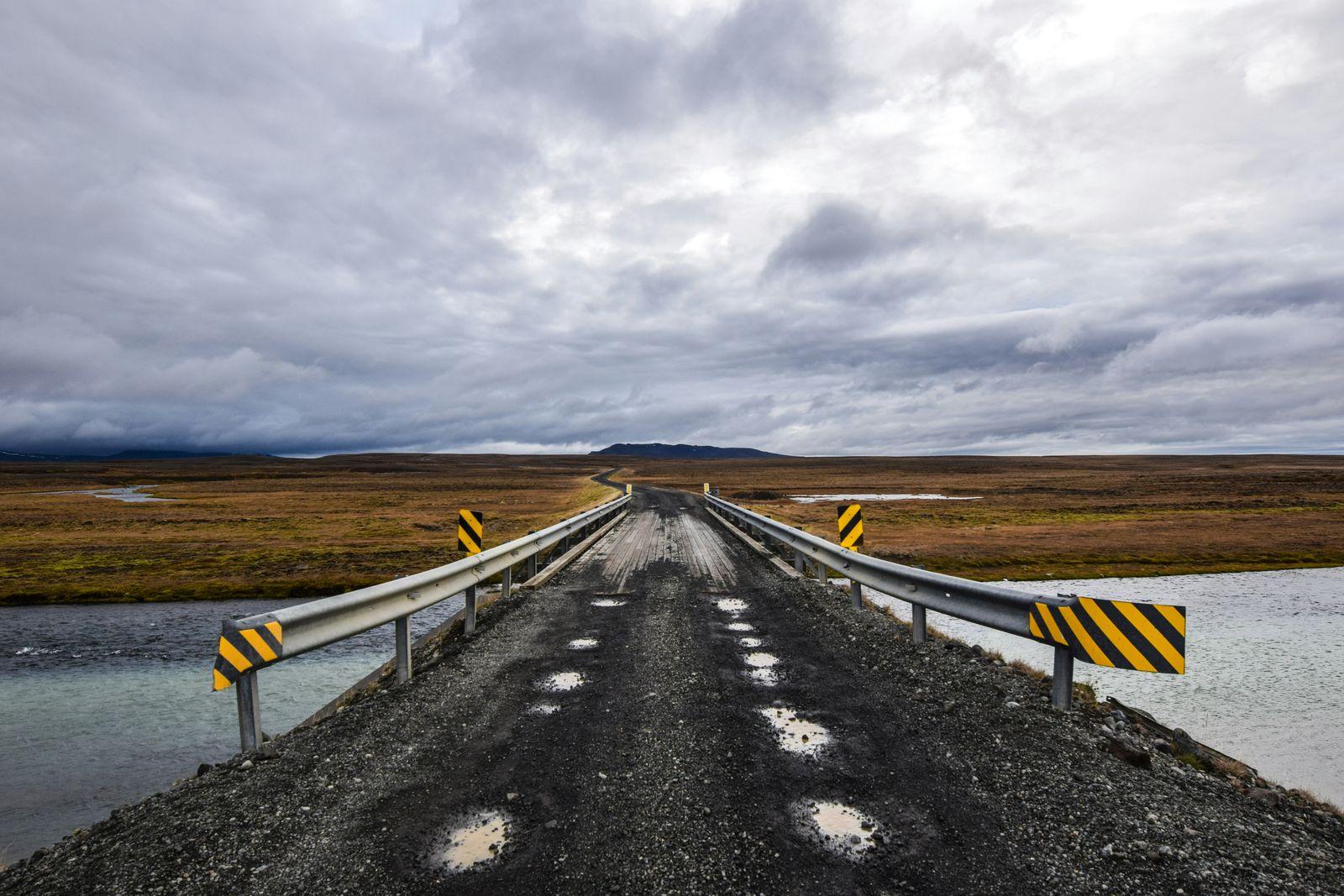
- Single-lane bridges. They are still common, on the Ring Road too, which has had 26 since a new section through Hornafjörður opened on 24 June 2026 (Government of Iceland, in Icelandic), down from 140 in 1990 (Vegagerðin). The car that reaches the bridge first has the right of way, but slow down early and see what the other driver does before you cross (Safetravel). Vegagerðin has lowered the limit to 50 km/h at single-lane bridges on roads with an average of 300 or more vehicles a day; on quieter roads there may be no lower limit and no warning sign, and after a 2024 crash the Transportation Safety Board recommended a safety review of the signs at single-lane bridges (RNSA, in Icelandic). The sign reads Einbreið brú: Road signs.
- Loose gravel where the asphalt ends and at the road's edge. Slow down before the surface changes from asphalt to gravel: the tires can lose grip, and at speed you can easily lose control (Safetravel). Gravel gives less grip than asphalt, and a car can get out of control when it leaves the wheel tracks for the loose gravel near the shoulder, the Transportation Safety Board warns (RNSA). The limit on gravel is 80 km/h, a maximum, not a target: Gravel roads & windshields.
- Cars stopped on the road for photos or the northern lights. The Icelandic Transport Authority says many accidents have happened when drivers stopped in the middle of the road to take pictures (Samgöngustofa). Stop only where you can pull right off the road, ideally at a parking area. At night it is nearly impossible for other drivers to see a person in the road, and hard to see a parked car: never stop on the road or in an unsafe spot beside it, and don't walk into the road for a photo (Safetravel). Where to watch the lights: Northern lights by car.
- Sheep and other livestock. Expect sheep on or by the road, and sometimes horses or cows. When there is a lamb on one side of the road and a sheep on the other, drive very carefully: one is likely to run to the other as you approach (Safetravel). Samgöngustofa's register counted 191 collisions with animals in 2025: two caused minor injuries, the rest damage only. If you hit an animal, tell the police and us; no waiver covers damage involving animals (rental terms 19 and 36(d)).
- Strong wind and car doors. Strong wind, snow, rain and drifting snow can make driving difficult and sometimes dangerous, even when the road looks clear (Safetravel). Check the warnings on vedur.is for the time and place you will drive. In strong wind, park facing into the wind and hold the door firmly as you open it (rental terms 18): Wind & car doors.
- Winter ice, snow and short days. Vegagerðin warns that winter driving can be dangerous for drivers inexperienced in winter conditions: unpredictable weather, ice and the short daylight can lead to severe accidents, even among experienced winter drivers (Vegagerðin). In the southeast, around Skaftafell, 62% of crashes happen in the eight winter months, although summer traffic there is almost three times heavier (RNSA). Speed limits apply to the best conditions (Safetravel), and a 4×4 helps but does not stop a car skidding on ice (Safetravel). All our cars have winter tires from 1 November to 14 April (rental terms 1): Winter driving.
- Tiredness after an overnight flight. Time differences and overnight flights leave many passengers tired on arrival and for the next few days, the Transportation Safety Board notes; citing European research, it adds that sleep loss and fatigue are a major factor in 15–20% of serious road crashes (RNSA, in Icelandic). Rest before a long drive, stop at least every 100 km or so, and if your eyes start to close, stop somewhere safe off the road and nap for about 15 minutes (Safetravel): Day one after a long flight.
- F-roads and rivers. Mountain roads (F-roads) often don't open until late June or early July, and closures must be respected (Vegagerðin). Only a four-wheel drive car confirmed in the booking as F-road approved may drive them, only when they are officially open, and never the F-roads our terms rule out for every car, such as F26, F88 and F910 (rental terms 16). Driving into or across a river is entirely at your own risk: no waiver covers it, and you pay the full repair cost or the car's value, plus towing (rental terms 17). Driving off the road is illegal (Samgöngustofa): F-roads & the Highlands.
- Speed, cameras and the basics. The limits are 30–50 km/h in towns, 80 km/h on gravel and 90 km/h on paved roads outside towns, and you must always adjust your speed to the conditions and the traffic; speed cameras across the country photograph speeding vehicles, and the ticket goes to the vehicle's registered owner (Ísland.is); with a rental car, it reaches you through us (rental terms 22). Headlights on at all times, seat belts in every seat, phones hands-free only (Samgöngustofa), and no alcohol: the limit is 0.2‰, so not even one drink (Safetravel). Limits and fines: Speed limits & fines.
Used to driving on the left?
Iceland has driven on the right since 1968 (Samgöngustofa). In a two-lane roundabout, the inner lane has the right of way when exiting, so the outer lane gives way (Safetravel). The rules and signs in more detail: Driving in Iceland.
How to plan a safe driving day
- Check the roads and the weather before you leave, and again during the day in winter: roads, closures and conditions on umferdin.is, weather warnings on vedur.is and alerts on safetravel.is (Safetravel). Our rental terms ask you to check them too (18). Map apps may not show closed or impassable roads (Safetravel).
- Plan around daylight. Around the winter solstice the sun is up for only about four hours in Reykjavík (University of Iceland almanac): drive the longer stretches in daylight (month by month: Winter driving). In summer, the light nights can hide how tired you are until it suddenly hits (Samgöngustofa).
- Keep the days short enough to stop. Don't schedule long days (Safetravel): plan a break at least every 100 km or so, and if there are two drivers, take turns; only drivers named in the rental agreement may drive (rental terms 15).
- Leave a travel plan on safetravel.is before a trip to remote areas: it gives ICE-SAR, Iceland's search and rescue association, what it needs to start a search, and names a contact who isn't traveling with you.
- Get your phone ready. Install the 112 Iceland app: when it contacts 112, it sends your location. Iceland's mobile networks are now 4G and 5G only, and some phones bought abroad may have trouble reaching 112; test yours by calling 1280, never 112 (112 Iceland).
- In winter, keep the tank well filled and carry warm clothes, water and something to eat: roads can close without warning when storms hit (Vegagerðin), and Vegagerðin advises carrying emergency supplies (Vegagerðin). Where to fill up: Fuel & paying at the pump.
- Wait or turn back when it gets worse. A road marked Lokað (closed) is closed (Safetravel). If the weather and conditions become too much, wait somewhere safe until they improve (Safetravel). If a road closure or a weather warning will make you late returning the car, tell us: it is then not unauthorized use, although the extra time is still charged (rental terms 12).
What Ring Road Cars does
We can't make the roads safer, but these are written into our rental terms:
- A check of the car with you. Before you drive off, we check the car together, record any existing damage in the Vehicle Condition Report you sign, and send you our photos and a 360° video of the car (rental terms 10).
- The rules explained at the desk. We explain the rental agreement and tell foreign renters about Icelandic traffic rules and signs, the off-road driving ban, river crossings and animals on the road (rental terms 30).
- Winter tires on every car from 1 November to 14 April, included in your rental (rental terms 1).
- Help day and night. Every rental includes 24/7 breakdown and emergency assistance on +354 779 9499 (rental terms 50). In an emergency, call 112 first. Call us before you arrange any other help or a repair: repairs we haven't approved are not reimbursed.
- A breakdown that isn't your fault: after a mechanical failure or normal wear and tear, roadside assistance is free, including a tow and a replacement car as soon as reasonably possible (rental terms 51). After an accident: Accident & breakdown.
What no waiver covers, whichever option you choose
Damage from driving into or across rivers (rental terms 17); from driving off road, on closed or prohibited roads, including the F-roads clause 16 rules out, or on F-roads in a car not confirmed as F-road approved (16); damage involving animals; and damage while the driver is under the influence of alcohol or drugs or otherwise unfit to drive (rental terms, clause 36). The riskiest choices are also the ones no waiver pays for. Every option explained: Rental car cover.
Questions about driving safely in Iceland
Is it safe for a tourist to drive in Iceland?
By European standards, Iceland's road-death rate is low: over 2021–2025 it was the fifth lowest in Europe per head of population, according to the Icelandic Transport Authority. In 2025, one foreign tourist died and 34 were seriously injured on Iceland's roads, out of about 2.27 million tourists who arrived through Keflavík Airport. The risks are specific: loose gravel, single-lane bridges, cars stopped on the road, sheep, strong wind, winter ice and darkness, tiredness after a long flight, and rivers. Check umferdin.is and vedur.is every morning and drive to the conditions.
How many people die on Iceland's roads each year?
10 people died in 2025 and 13 in 2024. Over the ten years 2016–2025 the average was 11.5 deaths and 195 serious injuries a year, according to the Icelandic Transport Authority. Because a few crashes move a small country's figures a lot, from 6 deaths in 2019 to 13 in 2024, it compares five-year averages with other countries.
Is it safe to drive in Iceland in winter if I have never driven on snow?
It can be, with care and flexible plans. Vegagerðin, Iceland's road authority, warns that winter driving can be dangerous for drivers inexperienced in winter conditions, and Safetravel advises being comfortable with winter driving before heading out. If you have never driven on snow or ice, keep to main roads, plan short days in daylight, check umferdin.is and vedur.is in the morning and during the day, keep plenty of distance, and be ready to wait or change plans when the weather turns. All our cars have winter tires from 1 November to 14 April.
How do single-lane bridges work in Iceland?
The car that reaches the bridge first has the right of way. Slow down well before the bridge (the sign says Einbreið brú), see what the oncoming driver does, and wait if in doubt. On roads with an average of 300 or more vehicles a day, the limit at these bridges is 50 km/h, but on quieter roads there may be no lower limit or warning sign, so slow down for every one. Since June 2026, the Ring Road has 26 single-lane bridges.
Can I stop by the road to watch the northern lights?
Only where you can pull right off the road, ideally at a parking area. Safetravel says never to stop in the middle of the road or in an unsafe spot beside it: Iceland's roads are narrow, and in the dark other drivers can hardly see a parked car or a person. Don't walk into the road to take pictures.
What are the most common fatal crashes in Iceland?
Over 2016–2025, cars leaving the road or rolling over and head-on collisions made up about six in ten of Iceland's fatal crashes (62 of 104). The risks particular to Iceland are loose gravel where the asphalt ends and at the road's edge, single-lane bridges, cars stopped on the road, livestock, strong wind, winter ice and short days, tiredness after an overnight flight, and rivers on F-roads.
Who do I call if something happens on the road in Iceland?
In an emergency, call 112; the 112 Iceland app also sends your location. For a breakdown or any other problem with our car, call our 24/7 line, +354 779 9499, before arranging other help or a repair. After an accident, tell the police and us immediately.
Official sources
Our rules on this page come from our rental terms; the facts and figures about Iceland's roads come from these official sources (checked 11 November 2026):
- Rental terms — Ring Road Cars
- Accident register and the road accident reports for 2025 and 2024 (in Icelandic) — Samgöngustofa (Ísland.is)
- Traffic division: overview of 2025 (in Icelandic, PDF) — RNSA, Icelandic Transportation Safety Board
- Traffic division: overview of 2024 (in Icelandic, PDF) — RNSA
- Report on the Skagavegur crash of 24 September 2024: single-lane bridges and gravel (in Icelandic, PDF) — RNSA
- Educational material for car rentals on foreign drivers, with the How to Drive in Iceland leaflets and Nap and Go — Samgöngustofa (Ísland.is)
- How to drive in Iceland — Safetravel
- Top 12 tips for driving — Safetravel
- Winter driving — Safetravel
- Fatigue and drowsiness — Safetravel
- Northern Lights Safety — Safetravel
- Travel plans — Safetravel
- Driving safely in Iceland — Vegagerðin
- The Ring Road — Vegagerðin
- Speed limits for vehicles — Ísland.is (Icelandic police)
- 112 Iceland app — 112 Iceland (Neyðarlínan)
- Important information regarding calls to 112 — 112 Iceland