
Can you sleep in a rental car in Iceland? Camping rules for drivers
Last updated: 10 November 2026
Prepared by Ring Road Cars at Keflavík Airport and checked against the official sources listed at the end of this page.
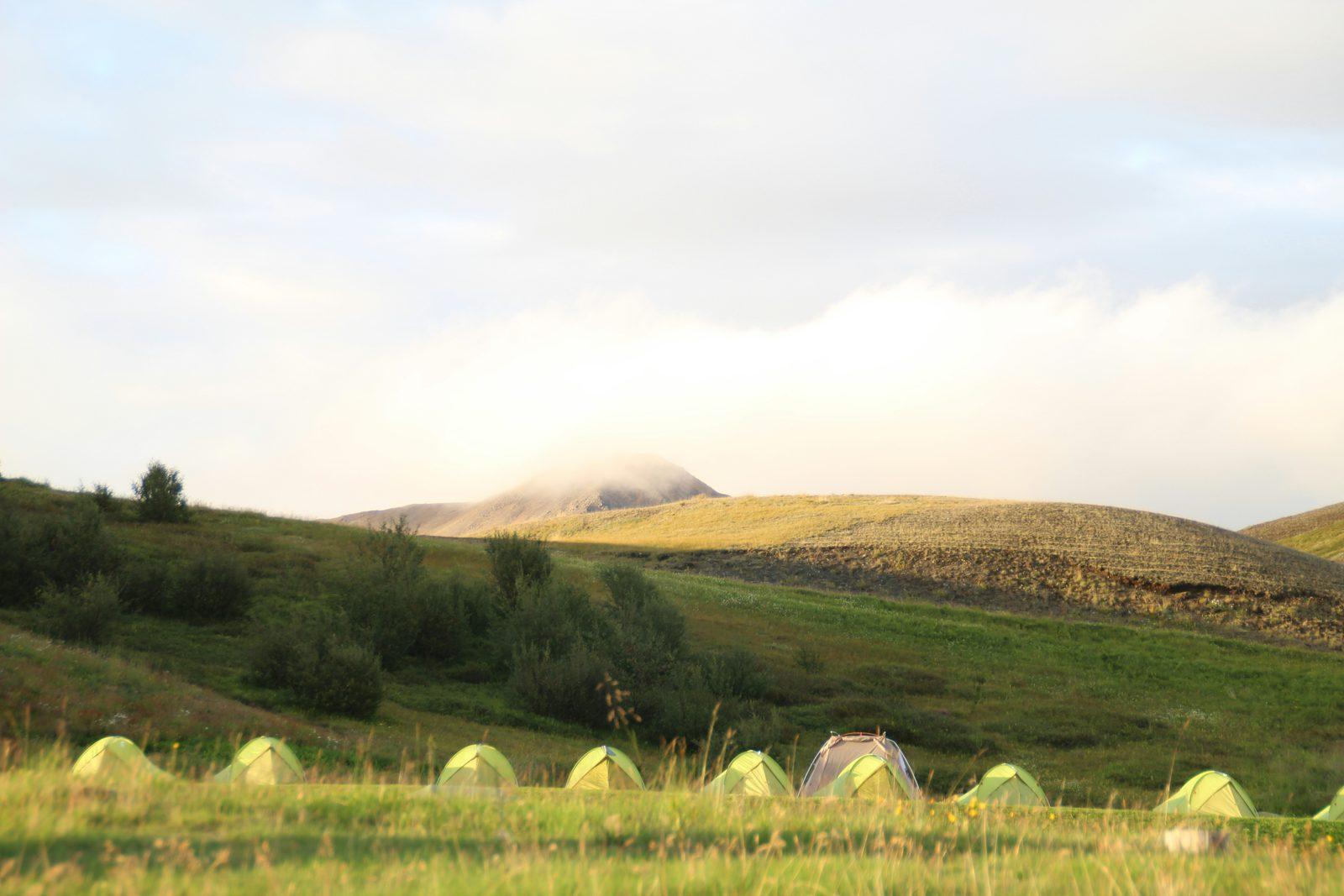
Short answer
Outside campsites and towns, Iceland's Nature Conservation Act (No. 60/2013) makes it illegal to spend the night in tent trailers, caravans, campervans or similar without the landowner's permission (Environment Agency of Iceland); in towns, police regulations ban overnight stays in tents, motorhomes, caravans and tent trailers in public places outside marked areas (Reykjavík police regulation). Neither rule names ordinary cars, so the cautious choice is a campsite or private land with the owner's permission. Our cars are not campervans and are not equipped for sleeping.
What the law says about camping and vehicles
Camping in nature is governed by the Nature Conservation Act No. 60/2013. According to the Environment Agency of Iceland, it is illegal to spend the night in tent trailers, tent campers, caravans, camper vans or similar outside organized campsites or urban areas unless the landowner or rightholder has given permission. Visit Iceland and Safetravel tell travelers the same: wild camping is not permitted, and campervans and motorhomes are restricted to campsites and to private land with the owner's permission.
Tents have a little more freedom. Along public routes in inhabited areas, you may pitch a traditional tent for one night on uncultivated land if there is no campsite in the immediate vicinity and the landowner has not restricted access with signs. You need permission to camp near homes or farms, for longer than one night, with more than three tents or on cultivated land. Protected areas can be stricter: at Þingvellir National Park, camping and overnight stays are not allowed outside marked camping areas.
In towns, the municipality's police regulation applies. Reykjavík's says you may not stay overnight in tents, motorhomes, caravans or tent trailers in public places in urban areas outside specially marked areas (No. 1097/2008, art. 9), and the national model, which applies where a town has no police regulation of its own, says the same (Regulation No. 1127/2007, art. 10).
What about an ordinary car?
None of these rules names ordinary cars. The Environment Agency's list ends with “or similar”, and we found no official guidance on whether a car you sleep in counts. Until an official source says otherwise, the cautious choice is to treat a night in a car like a night in a campervan: at a campsite, or on private land with the owner's permission. This page summarizes official sources and is not legal advice; where the exact wording matters, check the sources below.
Where you can stay overnight with a car
The rules at a glance:
| Where | Allowed? | Source |
|---|---|---|
| An organized campsite that is open | Yes, on the campsite's terms | Environment Agency; Visit Iceland |
| Private land outside towns | With the landowner's or rightholder's permission | Environment Agency |
| Lay-bys, parking areas and roadsides outside towns | Not in a campervan or similar without permission; cars are not named, so the cautious answer is no | Environment Agency |
| Streets and other public places in towns | Not in tents, motorhomes, caravans or tent trailers outside specially marked areas; cars are not named, so the cautious answer is no | Reykjavík; model regulation |
| National parks and other protected areas | Stricter rules can apply; at Þingvellir, only in marked camping areas | Environment Agency |
| Off the road: moss, grass, sand | No: all off-road driving is prohibited | Ísland.is |
In winter, plan your nights before you set off. Visit Iceland says most campsites are only open from May to September, though some are open all year, and its camping page links to regional pages on winter camping. Some campsites that stay open offer full services only in summer, so check with the campsite before you go.
Winter realities: cold, storms and short days
- Cold and snow: Visit Iceland does not recommend tent camping in winter, with blizzards, subfreezing temperatures and sometimes substantial snow, and notes that winter camping in a vehicle is done in specially equipped vehicles with insulation and heating devices.
- Storms: Safetravel warns that strong winds, snow, rain and drifting snow can make driving difficult and sometimes dangerous, and that the best thing to do is to wait in a safe location for the weather to calm down. Check the forecast at least once a day and the weather warnings on vedur.is.
- Short days: expect limited daylight (Safetravel); in winter it can be almost dark all day, so carry a headlamp. Daylight by month is in Driving month by month.
- Roads: check umferdin.is before each drive, keep your plans flexible and be ready to change or cancel them if conditions become unsafe (Safetravel).
- A backup plan: Safetravel suggests leaving a travel plan and keeping contact details for guesthouses and hotels along your route in case the weather becomes hazardous, and Visit Iceland suggests budgeting for a night or two in a guesthouse when camping in winter.
Never run the engine for heat while you sleep
Car engines produce carbon monoxide, a poisonous gas with no smell, and untreated poisoning can be fatal. Iceland's Poison Information Centre warns never to run vehicles indoors and never to sleep with fuel-burning heaters on in a closed room or tent. Do not use a stove, heater or candle inside the car either. None of our cars has a parking heater, so the only heat comes from the running engine. If you have to wait in the car, for example until a road reopens, keep enough fuel in the tank, run the engine only while you are awake, keep snow away from the exhaust pipe and open a window slightly.
Our rental terms that matter
Our rental terms do not mention sleeping in the car. These parts apply to any night you spend in it or next to it:
- Not a campervan: our cars are ordinary passenger cars, and the largest, in our Family & Space class, is a 9-seat passenger van. None is fitted out for sleeping: there is no bed, bedding, camping equipment or parking heater, and none is among our extras.
- No smoking or vaping: neither is permitted, and signs of either, such as stubs, ashes or odor, carry the €150 cleaning fee (clauses 23 and 40(k)).
- Clean inside at return: an interior that needs wet-vacuuming or special treatment beyond normal road dust carries the same €150 fee (clauses 11 and 40(k)).
- Interior damage: no waiver covers damage to the interior, including burns (clause 36).
- Stay on the road: off-road driving is illegal (Ísland.is), so never drive onto moss, grass, a beach or a path to find a spot for the night. It carries the €1,000 off-road driving fee, and no waiver covers the damage (clauses 16, 36 and 40(f)).
- Park only where it is allowed: you pay any parking charges and fines during the rental, plus a €10 processing fee for each one that reaches us (clauses 22 and 40(i)). In strong wind, park facing into the wind and hold the doors firmly (clause 18).
Every rental includes 24/7 breakdown and emergency assistance on +354 779 9499 (clause 50); see Accident & breakdown. In an emergency, call 112.
Practical alternatives
- A campsite: in your own tent or, where the campsite allows it, in the car. In winter, check first which campsites are open.
- Guesthouses, farm stays and hotels: in winter, book your nights before you set off; our 5-day winter itinerary shows one way to split the days.
- Rest after an overnight flight: Safetravel suggests a room at a hotel near the airport for a few hours' rest before you drive.
Questions about sleeping in a car in Iceland
Is it legal to sleep in my car in Iceland?
Outside campsites and towns, the Nature Conservation Act (No. 60/2013) makes it illegal to spend the night in tent trailers, caravans, campervans or similar without the landowner's permission, according to the Environment Agency of Iceland. In towns, police regulations ban overnight stays in tents, motorhomes, caravans and tent trailers in public places outside marked areas. Neither rule names ordinary cars, so the cautious choice is a campsite or private land with the owner's permission.
Can I park overnight and sleep in a car outside a campsite?
Private land with the owner's permission is the one clear option. Outside towns, the ban on spending the night in campervans or similar without permission may cover a car as well, since cars are neither named nor excluded; in towns, overnight stays in tents, motorhomes, caravans and tent trailers in public places are allowed only in specially marked areas. Follow local signs, and never drive off the road to find a spot.
Where can I camp with a car in Iceland in winter?
At a campsite that is open in winter, or on private land with the owner's permission. Visit Iceland says most campsites are only open from May to September, though some are open all year, and its camping page links to regional pages on winter camping. Check with the campsite before you go, and keep a guesthouse or hotel as a backup in case the weather becomes hazardous.
Can I pitch a tent next to my rental car?
Along public routes in inhabited areas, you may pitch a traditional tent for one night on uncultivated land if there is no campsite in the immediate vicinity and no sign restricts access; near homes or farms, for longer than one night, with more than three tents or on cultivated land, you need permission (Environment Agency of Iceland). Park only where parking is allowed and never drive off the road. Visit Iceland does not recommend tent camping in winter.
Are your rental cars campervans, or equipped for sleeping?
No. Our cars are ordinary passenger cars, and the largest, in our Family & Space class, is a 9-seat passenger van. None is fitted out for sleeping: there is no bed, bedding, camping equipment or parking heater, and we do not offer any as an extra.
Can I leave the engine running for heat while I sleep?
No. Car engines produce carbon monoxide, a poisonous gas with no smell, and Iceland's Poison Information Centre warns that untreated poisoning can be fatal. Do not sleep with the engine running, and do not use a stove, heater or candle inside the car. None of our cars has a parking heater: if you have to wait in the car, keep enough fuel in the tank, run the engine only while you are awake, keep the exhaust pipe clear of snow and open a window slightly.
Can I smoke or vape in the rental car?
No. Smoking and vaping are not permitted in our cars, and signs of either, such as stubs, ashes or odor, carry the €150 cleaning fee (rental terms, clauses 23 and 40(k)).
What if I get too tired to keep driving?
Stop and rest. Safetravel stresses being well rested before you drive and advises stopping only in a safe spot off the road, never on the road itself. For the night itself, the rules above apply, so plan to reach a campsite, guesthouse or hotel.
Official sources
The facts on this page come from these official sources (checked 10 November 2026):
- Where can you camp? — Environment Agency of Iceland (ust.is), on the Nature Conservation Act No. 60/2013
- Camping in Iceland — Visit Iceland
- Camping in Iceland — Safetravel (ICE-SAR)
- Police regulation for Reykjavík No. 1097/2008, art. 9 — Official Gazette on Ísland.is (Icelandic)
- Regulation No. 1127/2007 on police regulations, art. 10 — Ísland.is (Icelandic)
- Winter driving — Safetravel
- Weather warnings — Icelandic Met Office (vedur.is)
- Carbon monoxide poisoning — Poison Information Centre, Landspítali, on Ísland.is (Icelandic)