Do I need a 4×4 in Iceland?
The short answer
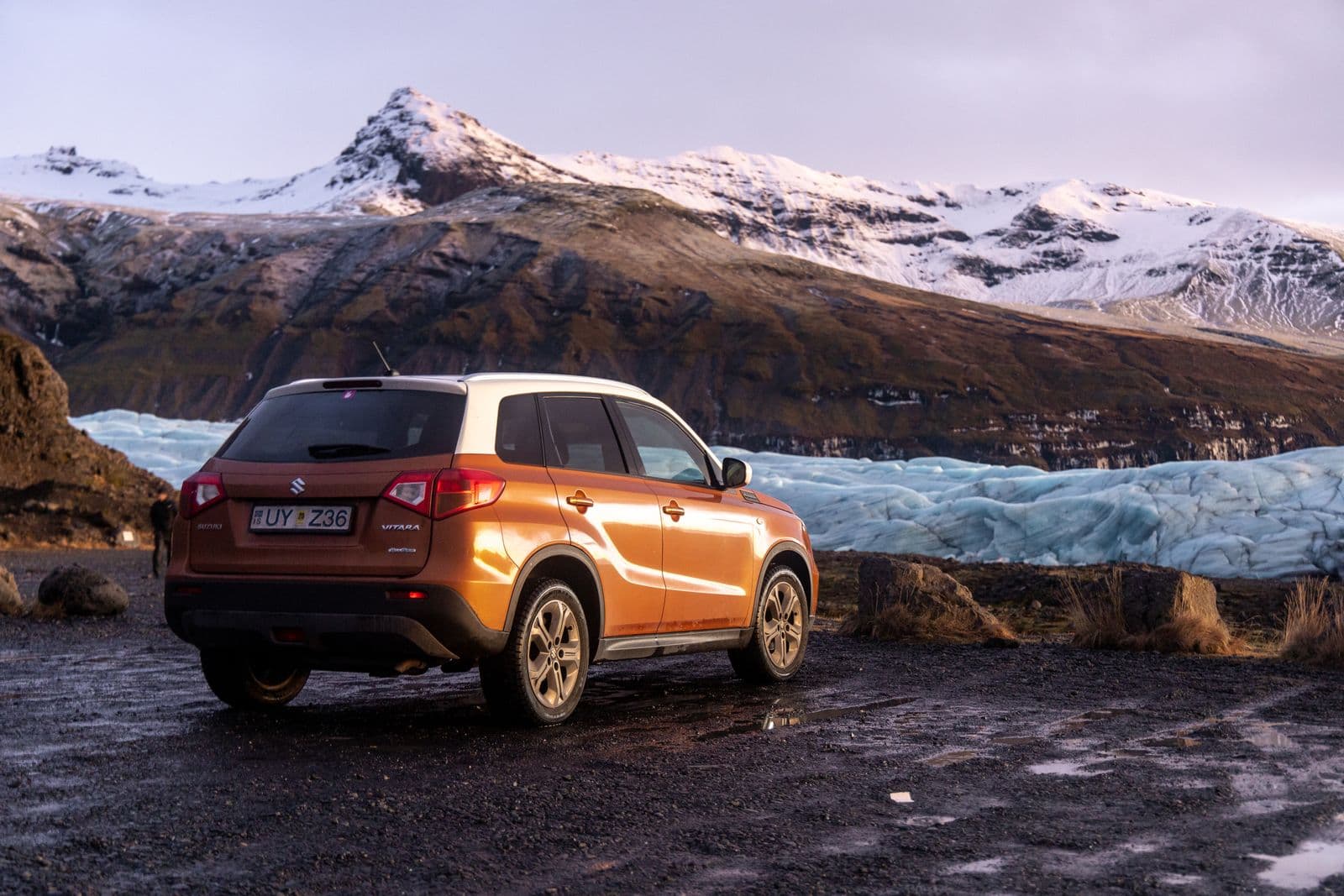
For the Ring Road, Golden Circle, and South Coast in summer, a 2WD or AWD compact SUV is enough — those routes are fully paved. You need a proper 4×4 for F-roads (Highland mountain tracks) and for winter driving on remote routes. River and water crossings are not covered by Ring Road Cars, regardless of vehicle type or cover level.
We'd rather tell you a cheaper 2WD will suit your trip than point you towards a car you don't need — read on and we'll be straight with you.
Which car for which route?
A quick reference before you choose your car type.
| Route | Everyday | Comfort | 4×4 Adventure | Family & Space |
|---|---|---|---|---|
| Reykjavík & Golden Circle | Fine | Ideal | Fine | Fine |
| Full Ring Road (Route 1) — summer | Fine | Ideal | Fine | OK for groups |
| Gravel side-roads | With care | Good | Good | With care |
| Winter Ring Road (Oct–Apr) | Risky — AWD better | AWD + winter tyres | Best choice | With care |
| Highland F-roads | Not permitted | Not permitted | 4×4 only | Not permitted |
Reykjavík & Golden Circle
Everyday
Fine
Comfort
Ideal
4×4 Adventure
Fine
Family & Space
Fine
Full Ring Road (Route 1) — summer
Everyday
Fine
Comfort
Ideal
4×4 Adventure
Fine
Family & Space
OK for groups
Gravel side-roads
Everyday
With care
Comfort
Good
4×4 Adventure
Good
Family & Space
With care
Winter Ring Road (Oct–Apr)
Everyday
Risky — AWD better
Comfort
AWD + winter tyres
4×4 Adventure
Best choice
Family & Space
With care
Highland F-roads
Everyday
Not permitted
Comfort
Not permitted
4×4 Adventure
4×4 only
Family & Space
Not permitted
With Ring Road Cars, river and water crossings are not covered on any vehicle or cover tier.
Summer Ring Road, Golden Circle & South Coast: 2WD is fine
Route 1 (the Ring Road) is a two-lane paved highway circling the entire island — no gravel sections, no river crossings, no requirement for raised clearance. The Golden Circle and South Coast are equally well-maintained paved routes. In summer (roughly June to September), a standard front-wheel-drive economy car completes them without drama.
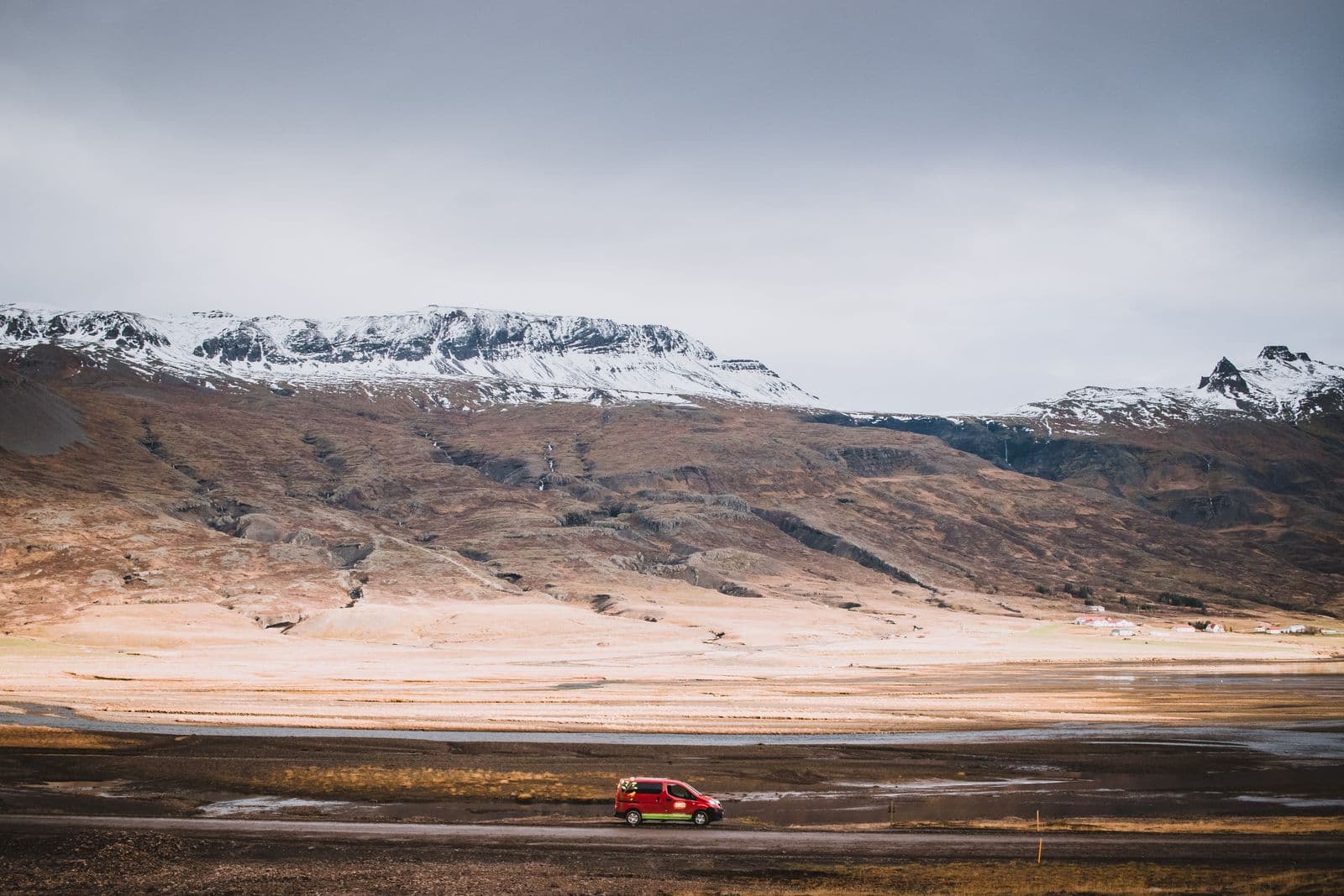
Where a bit of extra clearance helps is not on the main roads, but at the compact SUV handles these easily and is the most popular choice for summer Ring Road trips.
Winter Ring Road (October–April): AWD + winter tyres at minimum
In winter, a 2WD on summer tyres is a genuine risk. Iceland law requires rental operators to fit winter (studded) tyres approximately from 1 November to 15 April; our fleet is fitted accordingly. AWD plus winter rubber handles the Ring Road confidently in most winter conditions. A full 4×4 is worth considering if you plan to push into the Westfjords or Snæfellsnes in severe weather.
Always check road.is before setting out in winter — sections of Route 1 close in severe weather, and conditions can change within hours.
F-roads: a 4×4 is required — no exceptions
F-roads (prefixed "F" on Icelandic maps, e.g. F35 Kjölur, F225 Landmannalaugar, F26 Sprengisandur) are the unpaved Highland tracks that cross Iceland's interior. They require a 4×4 with genuine off-road capability — high ground clearance, a low-range transfer case, and the ability to ford shallow rivers.
Driving a 2WD on an F-road is not permitted under Ring Road Cars' terms. If you use a non-approved vehicle on an F-road, you can become personally liable for the repair or recovery cost. See our F-roads guide and the coverage matrix.
F-roads are also summer-only — typically open from late June or early July, closing again in September or October depending on snowfall. No fixed dates are published; check road.is / Vegagerðin for current opening status before heading into the Highlands.
River crossings: not covered by Ring Road Cars
Iceland's glacier-fed rivers fluctuate unpredictably — a crossing that looks shallow in the morning can be knee-deep by afternoon. With Ring Road Cars, river and water crossings are excluded under our cover rules. A 4×4 can physically attempt a crossing; it cannot make that crossing covered. If you see water across a road, stop, assess, and turn back if in doubt.
Which car for which trip?
| Route / Season | Recommended |
|---|---|
| Ring Road, Golden Circle, South Coast — summer | Economy / Comfort |
| Ring Road, South Coast — winter | Comfort (AWD) |
| Westfjords, Snæfellsnes — winter | 4×4 |
| F-roads (Kjölur, Landmannalaugar) — summer only | 4×4 only |
Related guides
See our fleet
Compare categories side by side and request a quote for your dates.
Common questions
Can I drive the Ring Road in a 2WD car?
Yes — in summer (roughly June to September). Route 1 is a fully paved highway and a standard front-wheel-drive car handles it fine. In winter (October to April) you want AWD at minimum, and a 4×4 is safer if you plan to leave the main road.
Do I need a 4×4 for the Golden Circle and South Coast?
No. The Golden Circle (Þingvellir, Geysir, Gullfoss) and the South Coast (Seljalandsfoss, Skógafoss, Jökulsárlón) are all paved, year-round routes. A compact AWD SUV is comfortable; a 2WD economy car works fine in summer.
When do you actually need a 4×4 in Iceland?
You need a registered 4×4 for two situations: driving F-roads (the Highland mountain tracks like F35 Kjölur or F225 Landmannalaugar) in summer, and driving remote or highland routes in winter. The Ring Road itself does not require a 4×4 in summer.
Are river crossings covered by rental insurance?
No. With Ring Road Cars, river and water crossings are excluded under our cover rules. If you see water across a road, stop and wait or turn back.
What is the difference between AWD and 4×4 for Iceland?
AWD distributes power continuously to all four wheels and is excellent for snow, gravel, and slippery tarmac — ideal for the Ring Road in all seasons. A proper 4×4 adds a low-range transfer case and higher ground clearance, which is what F-roads and river-adjacent Highland tracks genuinely require.
Last updated: 25 June 2026