Good to know
Driving in Iceland
Iceland is one of the world's great road-trip destinations, but it has a few rules and conditions that catch first-time visitors off guard. Read this before you set off — it could save you a damaged vehicle, a fine, or a dangerous situation.
Iceland road types at a glance
Know which road needs which car before you set off.
Everyday / Comfort / Any
Route 1 and Golden Circle are fully sealed two-lane tarmac — a standard 2WD handles them fine in summer.
Comfort recommended
Common near waterfalls and viewpoints. Slow to 30–40 km/h when meeting oncoming traffic — stone chips crack windscreens.
4×4 only — summer only
4×4 only, summer only; 2WD is not permitted under Ring Road Cars terms.
AWD / 4×4 + winter tyres
AWD or 4×4 with winter tyres, fitted by Icelandic law approximately November–April. Check road.is before every driving day.
With Ring Road Cars, river and water crossings are not covered, regardless of car type or cover tier.
Basic rules
- Drive on the right. Overtaking takes place on the left.
- Seatbelts are mandatory for every occupant at all times, both front and rear seats.
- Headlights on at all times — this is required by law in Iceland regardless of the time of day or light conditions.
- Zero-tolerance alcohol policy. Iceland's legal limit is 0.05% blood-alcohol concentration, but the practical advice is simple: do not drink and drive. Penalties are severe, and cover can be voided under the rental terms.
- Mobile phones: using a handheld phone while driving is illegal. Use a hands-free mount.
Speed limits
- 50 km/h in urban and built-up areas (watch for the speed-limit sign as you enter towns and villages).
- 80 km/h on unsealed gravel roads outside urban areas.
- 90 km/h on sealed (paved) roads outside urban areas.
Speed cameras and radar enforcement are common. Speed limits apply even on the most remote stretches of road. Fines are high and non-negotiable.
Gravel roads
Large sections of the Ring Road and many connecting roads are unsealed gravel. Slow down significantly when approaching oncoming traffic — stones kicked up at speed can crack a windscreen. The recommended safe speed on gravel when meeting another vehicle is 30–40 km/h or lower.
If you take Gravel & Glass Protection when you book, windscreen and body stone-chip damage is covered. If you do not, it falls within your CDW excess — or outside it entirely depending on the damage type. See our Insurance page for details.
Single-lane bridges
Iceland has many single-lane bridges on rural roads, including parts of Route 1 (the Ring Road). The right of way rule is: the vehicle that reaches the bridge first has priority. If another car is already on the bridge or clearly closer to it, pull over and wait. Do not try to pass on the bridge itself.
Single-lane tunnels operate similarly — check for traffic signs indicating which direction has priority and whether there are passing places inside.
F-roads & highland tracks
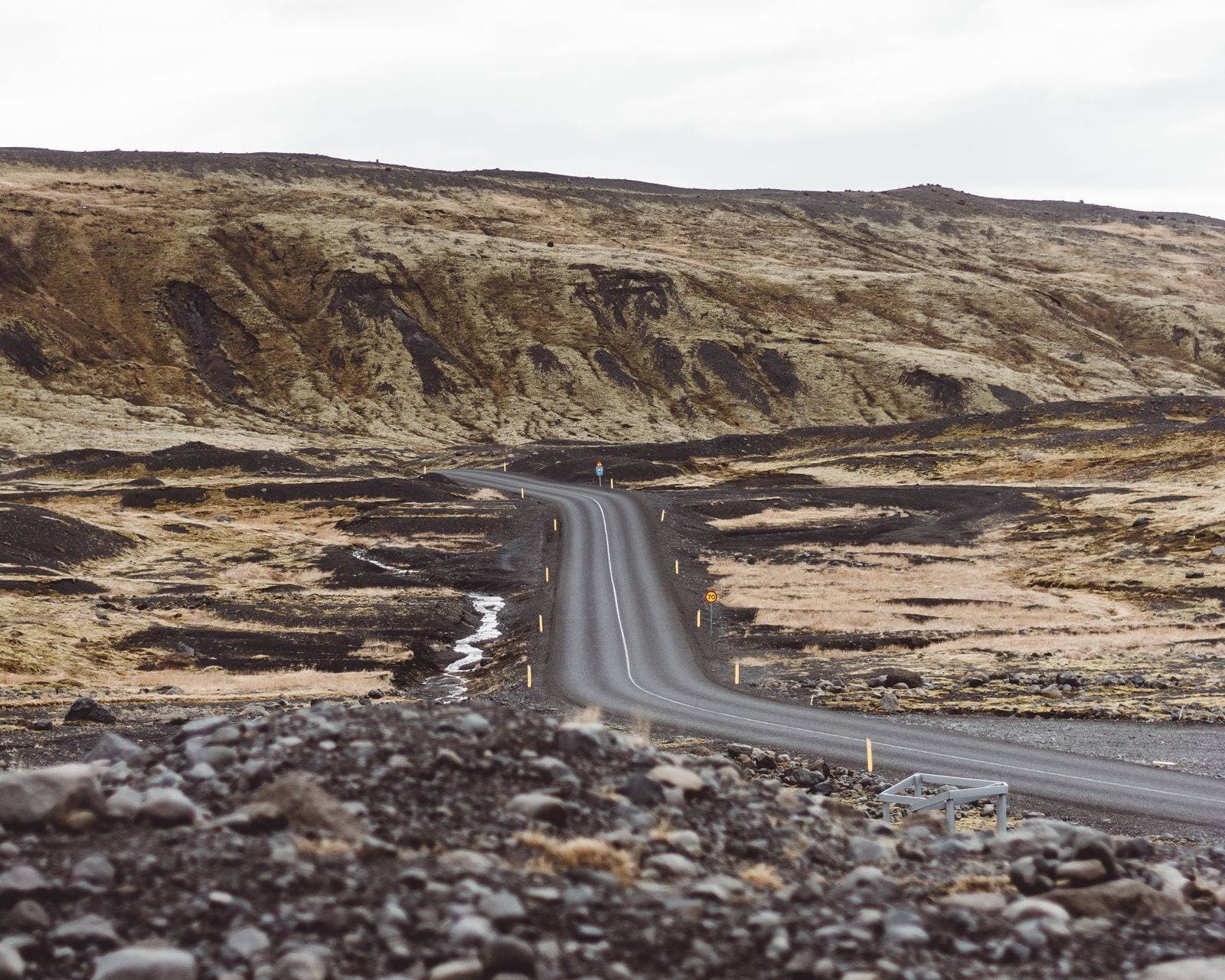
F-roads (Fjallvegir) are unmaintained highland tracks accessible only by 4x4 vehicles. They are typically only open from late June to early September, depending on snow and conditions. The Icelandic Road and Coastal Administration publishes live opening status at road.is.
- Only drive an F-road in a suitable, registered 4x4. Passenger cars, hybrids (including hybrid SUVs) and all 2WD vehicles may not drive F-roads — nor Kjölur (35), Kaldidalur (550), Öxi (939), road 586 or road 864. Only non-hybrid 4WD SUVs may, and certain F-roads stay excluded (see the terms).
- Standard CDW does not cover F-road damage. You are driving at your own risk and financial liability on these tracks unless you have confirmed additional cover.
- River crossings on F-roads are not permitted in rental vehicles under any circumstances and are excluded from all protection.
Strong winds
Iceland experiences sudden and extreme wind gusts, particularly in the South and in open highland areas. Wind speeds can be high enough to rip a car door from its hinges if opened carelessly.
- Hold car doors firmly when opening in wind. Wind-damaged doors are a common and costly claim that is not covered by standard CDW.
- In severe wind warnings, pull over somewhere sheltered and wait. Do not try to drive through high-sided vehicles or on exposed mountain passes in storm conditions.
- Check the Icelandic Meteorological Office forecast at vedur.is before each driving day.
Animals on the road
Sheep roam freely across Iceland from spring to autumn and regularly wander onto roads — including the Ring Road. Drive at a speed that allows you to stop safely. A herd of sheep in the road is a serious hazard and a sudden animal collision can write off a vehicle.
Reindeer are present in the East of Iceland, and horses can also be found near roads in some areas. Slow down, give animals space, and never use your horn to try to move them on.
Winter driving
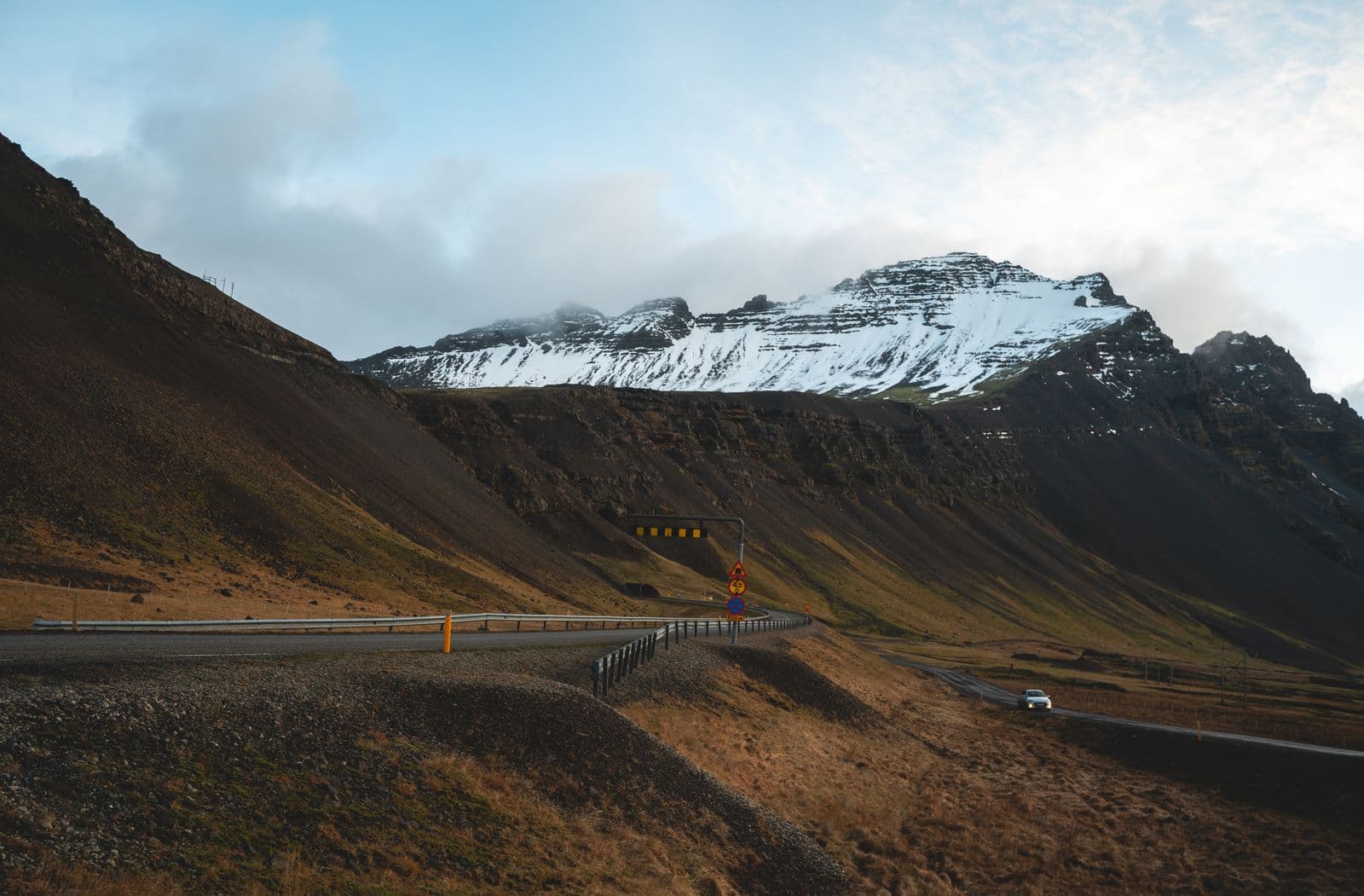
Icelandic winters bring ice, compacted snow, blowing snow, and very short daylight hours. Winter tyres — including studded tyres — are included in your rental in season.
- Increase following distances significantly on snow and ice. Stopping distances are much longer.
- Black ice forms without warning on bridges and in shaded valley bottoms even when other roads seem clear.
- Mountain passes such as Öxnadalsheiði, Vatnsskarð, and Holtavörðuheiði can close without warning in winter. Check road.is every morning before departing.
Emergency resources
Emergency number: 112
— police, ambulance, search and rescue. Iceland also has a 112 app that sends your GPS location automatically.
Road conditions:
road.is — live road closures, surface conditions, and F-road opening status.
Safety and travel advice:
safetravel.is — register your travel plan so search and rescue know where to look if you do not arrive.
Weather:
vedur.is — the Icelandic Meteorological Office, with forecasts and wind warnings.
Ring Road Cars emergency line:
a 24/7 contact number is provided at pickup; assistance depends on conditions. Call us first in the event of a breakdown or accident.
What it costs to drive (kilometre fee, tolls, parking, fuel)
These are government and third-party charges — not Ring Road Cars fees. For our own service fees (fines passed through, cleaning, fuel shortfall, etc.) see the Fees & charges page.
Road-use charge (kílómetragjald) — ISK 1,575 per started rental day
Since 1 January 2026, Iceland levies a distance-based road fee — kílómetragjald — on all motor vehicles up to 3.5 tonnes. The fee replaced the previous carbon-based fuel duty and applies to all vehicles regardless of fuel type, including electric and hybrid cars. The underlying rate is 6.95 ISK per kilometre for vehicles up to 3.5 t.
For rental cars, Iceland allows a daily-fee method. The official rental-car daily fee is ISK 1,390 per started rental day. Our estimate currently shows ISK 1,575 per started rental day, which is the official daily fee plus an ISK 185 processing estimate. It appears as a separate, clearly labelled line on your invoice. Official reference: island.is/en/kilometer-fee.
- Applies from your first day of rental — every started day is charged at ISK 1,575. “Per started day” means a day begun counts as a full day (same convention as the rental rate itself).
- Worked example: a 10-day rental = ISK 15,750 road fee total.
- Required by law for all Icelandic car rentals; the road-tax portion is paid in full to the government.
- The charge is shown in the risk and price summary before payment.
What the road fee covers
- Iceland's official rental-car daily road fee plus the processing estimate shown before booking.
Not covered — paid separately by the driver
- Tunnel tolls — e.g. Vaðlaheiðargöng (north Iceland, ISK 2,200 approx), paid online via veggjald.is using your vehicle reg number within a few hours of passing through.
- Paid parking — Reykjavík city zones (P1–P4) and some popular attractions. Pay via the Parka app.
- National park & site entry fees — charged directly by each attraction; your own responsibility.
Official road-fee reference: island.is/en/kilometer-fee. Live road conditions and closures: road.is.
Vaðlaheiðargöng tunnel (north Iceland)
The Vaðlaheiðargöng tunnel runs beneath the Vaðlaheiði mountain north of Akureyri. It is a tolled tunnel — there are no toll booths; payment is made online at veggjald.is using the vehicle registration number, typically within a few hours of passing through. If the toll is not paid in time, a fine is issued to the registered vehicle owner; we will pass any such fine on to you in full.
Hvalfjörður tunnel (near Reykjavík)
The Hvalfjörður tunnel connects Reykjavík and the Vesturland region. It became toll-free in 2018 once construction costs were recovered — there is no charge to use it. The older coastal road around the fjord is still open and scenic, adding about an hour each way.
Paid parking in Reykjavík
Paid parking zones cover most of central Reykjavík, marked P1 (city core, highest rate) through P4 (outer fringe, lower rate). Payment is via the Parka app or similar parking apps (iOS and Android). Physical coin meters have been largely phased out in central zones. Free parking is available outside paid zones — parka.is can help you locate spots. Outside Reykjavík, paid parking is uncommon; popular tourist spots like Gullfoss and Geysir may charge a small parking fee in peak season.
Full guide: tolls, parking & entrance fees in Iceland →
Fuel
Fuel is your own cost, paid directly at petrol stations. Iceland's most common brands are Orkan, N1, and Olis. Petrol stations can be sparse in the Highlands and remote East — top up whenever you have the opportunity. Diesel and petrol are both widely available; check which your vehicle takes at pickup.
Aside from the above, there are no road tolls on Icelandic public roads. The Ring Road (Route 1) and all national routes are free to use. Privately operated tourist attractions may charge a parking or access fee — these are site-specific and your own responsibility.