
Off-road driving in Iceland: what's banned and what it costs
Last updated: 11 November 2026
Prepared by Ring Road Cars at Keflavík Airport and checked against the official sources listed at the end of this page.
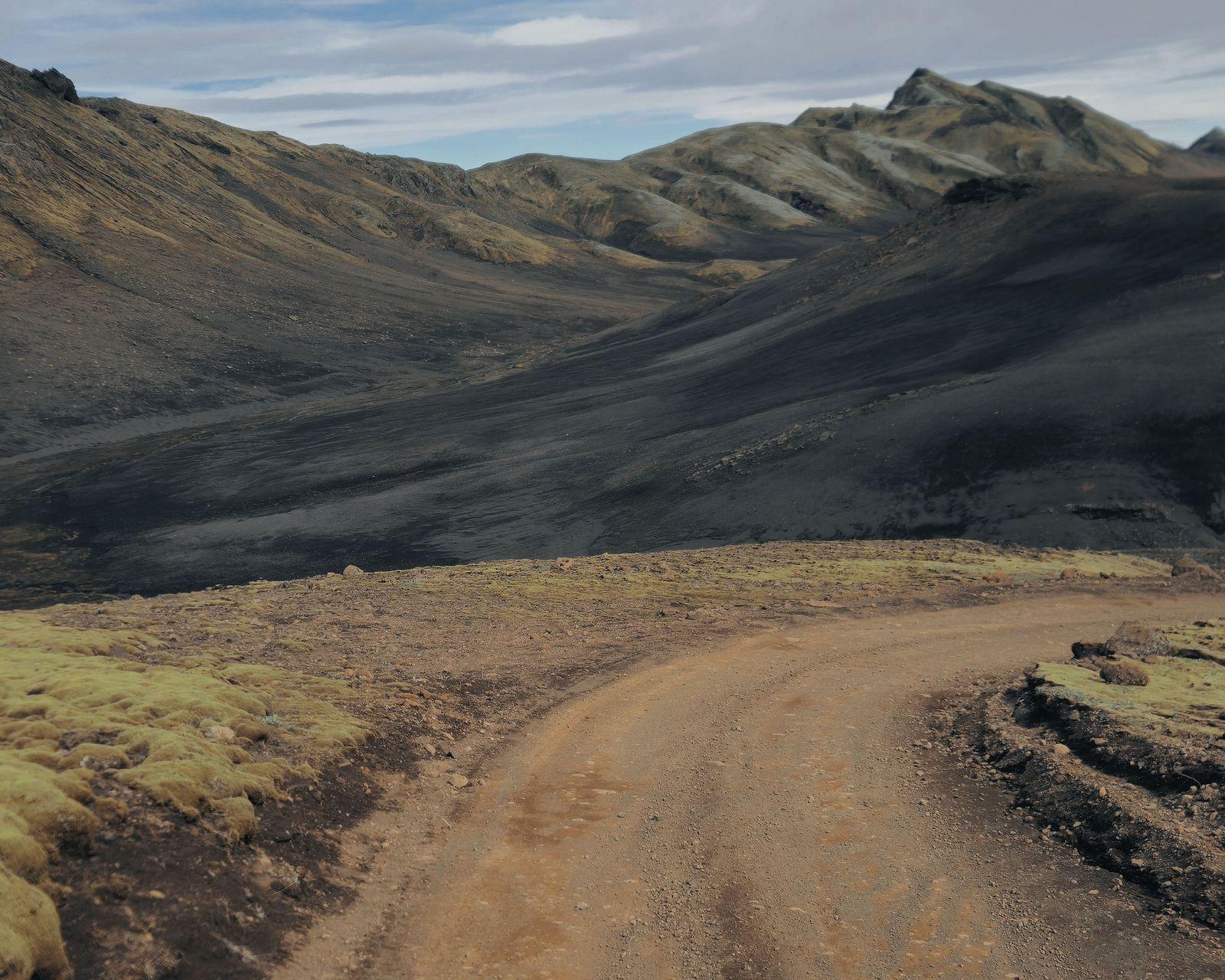
Short answer
No: in Iceland you may not drive a motor vehicle off roads and tracks. The Nature Conservation Act (No. 60/2013, article 31) bans it on black-sand beaches, moss and grass as anywhere else, and that includes driving around a snowdrift or a road closure, or pulling onto vegetation to park, turn or watch the northern lights. F-roads and gravel roads are roads; leaving them is off-road driving, and our rental terms also rule out unregistered tracks and closed roads. The police fine offenders (several hundred thousand krónur in the case reported in 2026), and under our terms you also pay a €1,000 fee and the full cost of any damage, which no waiver covers (clauses 16 and 36). Stop only in marked parking areas, turn back when the road is blocked, and report off-road driving on 112.
What the law says
Iceland's Nature Conservation Act (No. 60/2013) bans driving motor vehicles off roads in its article 31, as the Environment Agency of Iceland quotes it (in Icelandic), and Ísland.is sums it up: all off-road driving is prohibited under the act. A leaflet from the Icelandic Road and Coastal Administration, the police and Safetravel defines off-road driving as a vehicle leaving a recognized road or track. Safetravel puts it simply: F-roads and gravel roads are not off-road driving, but driving off them is.
- The glacier and snow exception doesn't apply to our cars. The law allows driving on glaciers and on snow-covered ground outside towns only when the ground is frozen or the snow cover is solid, and there is obviously no risk of damaging nature (Environment Agency). In practice, glaciers call for specially equipped vehicles (Vatnajökull National Park), and our rental terms do not allow driving on glaciers, frozen lakes or snow away from maintained roads (clause 36(h)).
- Nobody can give you permission on the spot. Landowners and municipalities may not allow off-road driving (Environment Agency).
- Penalty: off-road driving is punishable by fines or imprisonment (Environment Agency).
What counts as off-road driving
The rule is simple: if your wheels leave the road or track, it is off-road driving, however short the distance. These are the situations travelers ask about most:
| Situation | Allowed? | Why |
|---|---|---|
| Driving on a black-sand beach, tidal flats or a sand plain | No | A beach is not a road. Tracks in sand and on bare ground can last even longer than on vegetation, and our terms exclude damage on beaches and tidal areas (clause 36(h)). |
| Driving onto moss, grass or other vegetation, even a few meters | No | Wheel tracks form easily, and vegetation can take decades to recover. |
| Turning around at the roadside | Only on the road surface | Use a junction, a pull-out or a parking area. Driving onto the moss or soft ground beside the road to turn is off-road driving. |
| Driving around a snowdrift, a flooded or washed-out stretch, or a closure | No | Turn back or walk: bad road conditions never justify leaving the road. A closed road is off-limits too (clause 16). |
| Following a track on a map app or an old map | Only if it is a registered road and open | Roads in nature where motor vehicles may drive (other than national roads) are listed in an official register kept by the Road and Coastal Administration; our terms forbid unregistered roads and paths (clause 16). |
| Glaciers and frozen lakes | Never in one of our cars | The law allows driving on frozen, snow-covered ground only where nature can't be damaged, and glaciers in practice call for specially equipped vehicles; our terms exclude glaciers, frozen lakes and snow away from maintained roads (clause 36(h)). |
| Parking beside the road for photos or the northern lights | Use a marked parking area | The law allows parking right next to the road (within one car's width, says the Environment Agency) only where it damages no nature and creates no risk of accidents; Safetravel says to park in a designated parking lot and never to stop on the road or its side for photos. |
| F-roads and gravel roads | Yes: they are roads | F-roads only in a four-wheel-drive car (4×4 or AWD) your booking confirms as F-road approved, only when the road is officially open, and never on the F-roads our terms rule out for every car (clause 16; F-roads & the Highlands). |
Why it matters: moss takes decades to recover
Off-road driving causes serious damage to the land, says the Environment Agency: in many places the ground is so fragile that it takes years and even decades to recover, vegetation can take decades, and on sand and bare ground the damage can take even longer to disappear. Iceland's growing season is short (Environment Agency, in Icelandic).
Tire tracks are not just an eyesore: water runs along them and speeds up soil erosion, and they tempt other drivers to follow. In Iceland's volcanic soils, vehicle tracks form easily and are often permanent, whether the ground is vegetated or bare (leaflet from the Road and Coastal Administration, the police and Safetravel).
How to stay legal
- Stop only where cars are meant to stop: marked parking areas, viewpoints and pull-outs. Safetravel's advice: no stopping in the middle or on the side of the road for photos (Safetravel). For the northern lights, park in a designated parking lot (Safetravel; Northern lights by car).
- Check that the road is open before you set off: roads closed or marked impassable on umferdin.is are off-limits under our terms (clause 16). A road on your map is not necessarily passable: being in the official register does not make a road passable for every vehicle (regulation No. 260/2018, in Icelandic). See Road conditions.
- When the road ahead is blocked, turn back. If snow, water or a washout blocks the way, don't look for a way around it: walk or go back, says the Environment Agency. Call us if you need help: +354 779 9499.
- Highland roads: only in a four-wheel-drive car (4×4 or AWD) your booking confirms as F-road approved, only when the road is officially open, and never on the F-roads our terms rule out for every car (F-roads & the Highlands; Landmannalaugar by car).
- Looking for a spot for the night? Stay on the road; never drive onto moss, grass or a beach to find one (Sleeping in a rental car).
- Directed off the road? Leaving the road because you are forced to, for example by road works or the police, is not a breach of our terms (clause 16).
What it costs
Police fines. There is no fixed tariff. Under the State Prosecutor's instructions, the police can settle off-road driving with a fine of ISK 10,000 to ISK 1,000,000, depending on the nature and extent of the offense (Ríkissaksóknari, section 2.10, in Icelandic); where nature is seriously damaged, the law sets a fine of at least ISK 350,000 or up to four years in prison (Nature Conservation Act, art. 90, in Icelandic). In June 2026 the South Iceland Police said fines for illegal off-road driving can run into the hundreds of thousands of krónur (Iceland Review). Reported cases, not a price list:
- June 2026, South Iceland highlands: two foreign tourists drove around every snowdrift on the Emstruleið track, at times up to a kilometer off the route (Iceland Monitor, 22 June 2026). The South Iceland Police stopped the two, reported as French tourists, and fined them several hundred thousand krónur (Iceland Monitor, 30 June 2026); The Reykjavík Grapevine reported one driver's first fine as ISK 300,000 (17 July 2026).
- Fines may rise: Iceland's environment minister has called the current fines too low, and the government is working on stronger enforcement and penalties (Iceland Monitor, 30 June 2026; The Reykjavík Grapevine, 17 July 2026).
Our fee and the damage. Under our rental terms, driving off road, on unregistered roads or paths, or on a closed road carries a €1,000 fee (the off-road driving fee or the prohibited-road fee), and no waiver at any tier, MAX included, covers the resulting damage: you pay the full repair cost (clauses 16, 36(h) and 40). The statutory insurance still applies, but the insurer has a legal right of recourse against the renter (clause 16).
Three separate costs
A police fine, our €1,000 fee and the full cost of repairing the car, with no waiver to limit it. What each cover option includes: Rental car cover.
How to report off-road driving
Call 112. The Road and Coastal Administration, the police and Safetravel ask anyone who sees off-road driving to report it to the police on 112 or to rangers (leaflet). After the damage in June 2026, the authorities asked people to call 112 as quickly as possible, because delays can make investigations considerably more difficult (Iceland Review). In Vatnajökull National Park you can also tell a ranger (Vatnajökull National Park).
If you can do it safely, note where and when it happened, the vehicle and its license plate: in the June 2026 case, a witness's photos and plate numbers went to the police (Iceland Monitor, 22 June 2026). Never follow the vehicle off the road yourself.
Questions about off-road driving in Iceland
Is driving on a black-sand beach allowed in Iceland?
No. A beach is not a road, so driving on it is off-road driving, which the Nature Conservation Act bans. Tracks in sand and on bare ground can take even longer to disappear than on vegetation. In one of our cars it also carries the €1,000 off-road driving fee, and no waiver covers damage on beaches or tidal areas.
Can I park off the road to see the northern lights?
Use a marked parking area. The law allows parking within a car's width of the road only where it damages no nature and creates no risk of accidents, and Safetravel says to park in a designated parking lot and never to stop on the road. Never drive onto moss or grass to find a dark spot.
Is it off-road driving to go around a snowdrift or a road closure?
Yes. Leaving the road to get around snow, water or a closure is off-road driving: turn back instead. In June 2026 the police stopped two tourists who had driven around snowdrifts on a highland track and fined them several hundred thousand krónur, Iceland Monitor reported. A closed road is also off-limits under our rental terms.
What is the fine for off-road driving in Iceland?
There is no fixed tariff: the police set the fine case by case, within the ISK 10,000 to ISK 1,000,000 range the State Prosecutor's instructions allow, and in June 2026 they said fines can run into the hundreds of thousands of krónur. In that case, The Reykjavík Grapevine reported on 17 July 2026 that one driver's first fine was ISK 300,000. Where nature is seriously damaged, the law sets a fine of at least ISK 350,000 or up to four years in prison. In one of our cars you also pay our €1,000 fee and the full cost of any damage.
Is off-road driving allowed in the Highlands or on F-roads?
F-roads are roads, so driving on them is not off-road driving, but leaving them is, and that is banned in the Highlands as everywhere else. With us, F-roads are allowed only in a four-wheel-drive car (4×4 or AWD) your booking confirms as F-road approved, only when the road is officially open, and never on the F-roads our terms rule out for every car (clause 16).
Does rental car cover pay for damage from off-road driving?
No. Under our rental terms no waiver at any tier, MAX included, covers damage from driving off road, on unregistered roads or paths, or on closed roads, and a €1,000 fee applies on top. The statutory insurance still applies, but the insurer can claim its costs back from the renter.
How do I report off-road driving in Iceland?
Call 112, the emergency number, which reaches the police, or tell a ranger. Report it as soon as you can: the police say delays can make investigations harder. If you can do it safely, note the place, the time, the vehicle and its license plate.
Sources
Our rules come from our rental terms (valid from 1 August 2026); the law and the official advice come from these sources, and the reported fines from the news reports listed (all checked 10 November 2026):
- Rental terms — Ring Road Cars
- Information for municipalities: off-road driving and the road register (in Icelandic, PDF) — former Environment Agency of Iceland (ust.is)
- FAQ: Where can you drive off-road? — former Environment Agency of Iceland (ust.is)
- Driving in uninhabited areas — former Environment Agency of Iceland (ust.is)
- What is off-road driving? (leaflet, PDF) — Icelandic Road and Coastal Administration, police and Safetravel
- Off-road driving permit — Ísland.is (Nature Conservation Agency)
- Regulation No. 260/2018 on roads in Icelandic nature (in Icelandic) — Ísland.is
- Top 12 tips — Safetravel
- Northern lights safety — Safetravel
- Driving — Vatnajökull National Park
- Police investigate off-road damage in South Iceland (22 June 2026) — Iceland Review
- Off-road driving on Emstruleið (22 June 2026) — Iceland Monitor
- Tourists fined; minister calls the fines too low (30 June 2026) — Iceland Monitor
- Cover story on the June 2026 case (17 July 2026) — The Reykjavík Grapevine
- Instruction RS 1/2025 on offenses that can be settled with a police fine, section 2.10 (in Icelandic, PDF) — State Prosecutor (Ríkissaksóknari)
- Nature Conservation Act No. 60/2013, art. 31 and 90 (in Icelandic) — Althingi